

For the third year running, I’ve surveyed event attendees about what matters to them. This year’s responses, benchmarked against 2024 and 2025 data, reveal something organisers can’t ignore:
With budgets biting, attendees are recalibrating what justifies showing up at events.
First, a look at who participated in the survey.
Who These Respondents Were
The three surveys had around 200 respondents from fourteen industry sectors. About the 2026 respondents:
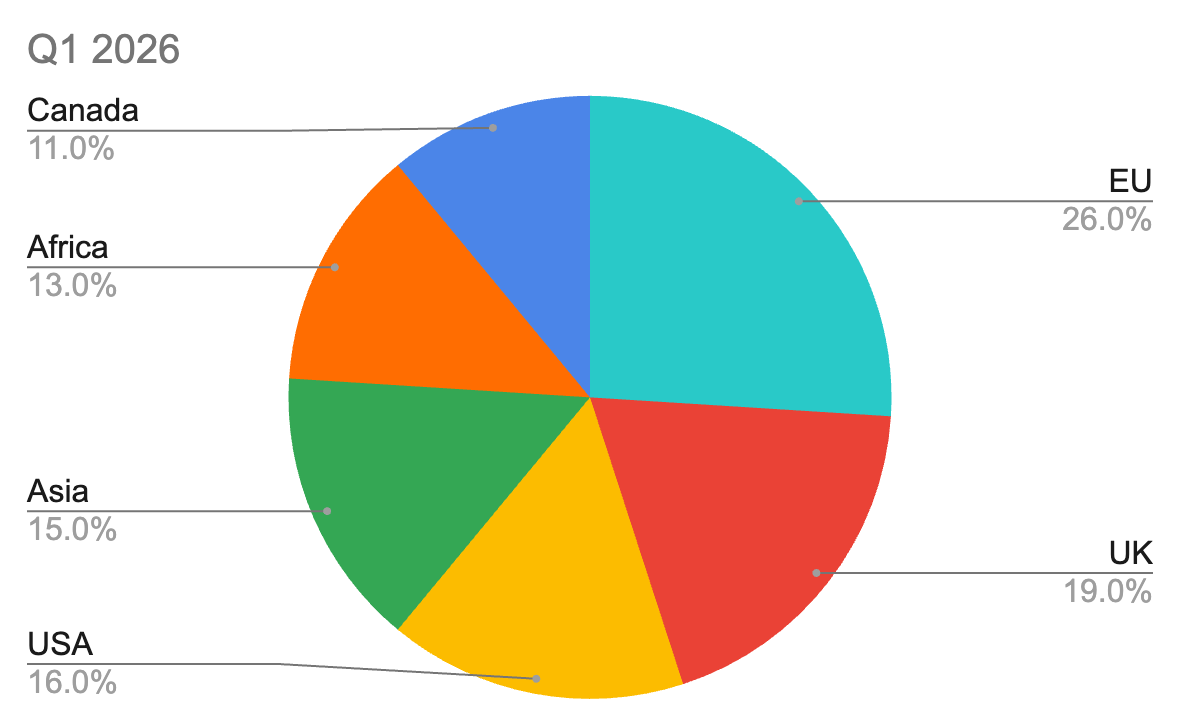
Geography
They were from:
Event frequency
They were regular event-goers, with 66% attending two or more events and a further 26% one event per year. In other words, 92% attend at least one event per year.
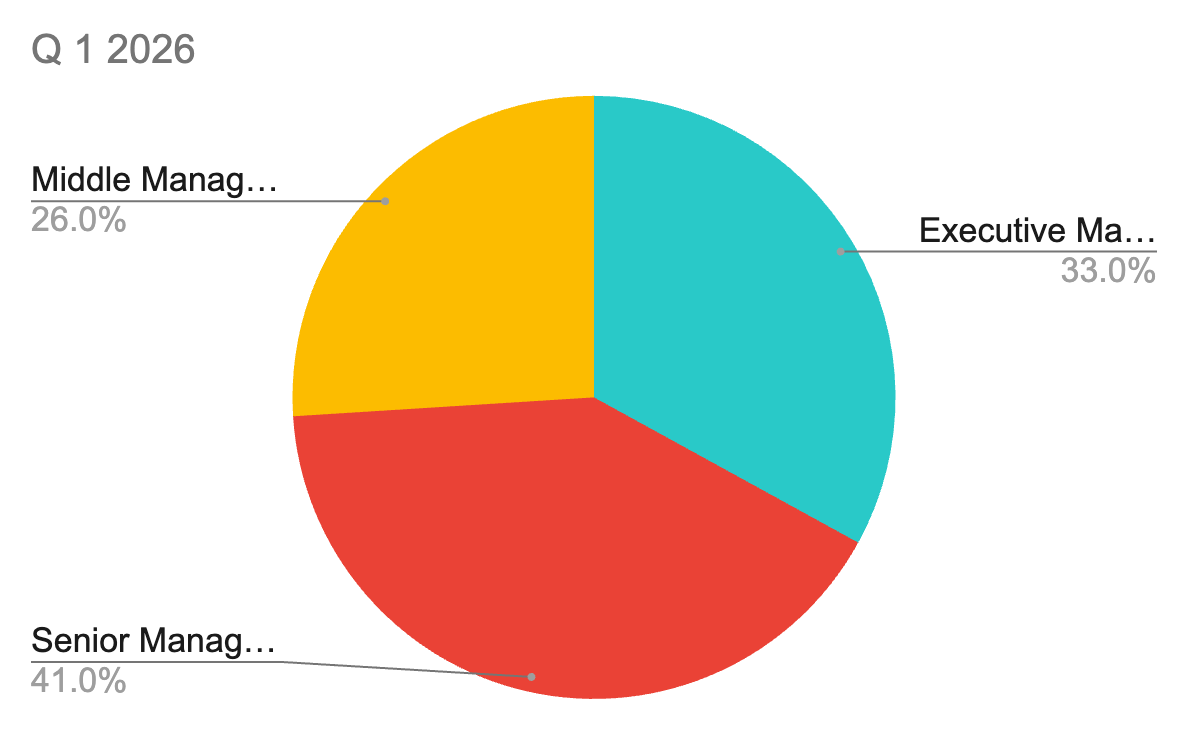
Seniority:
They were all in managerial positions, such as C-suite, MDs, Founders, SVP and VPs, Directors, Heads of Departments, and so on.
Gender and Age
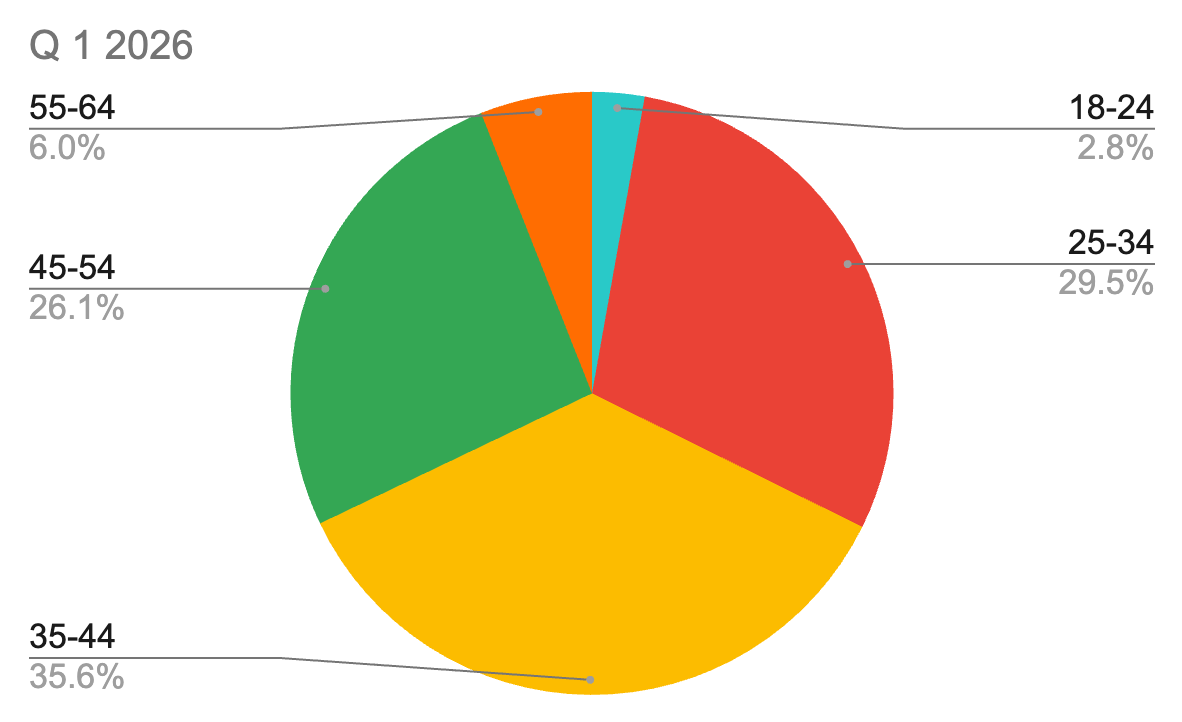
52% said they were female, and 48% male. More than 90% were aged 25-54, with the single largest group in the 35-44 bracket. These are professionals in their prime earning and decision-making years.
What follows is an overview of what is important for this demographic when it comes to the events they attend or plan to attend.
ROI Pervades Everything
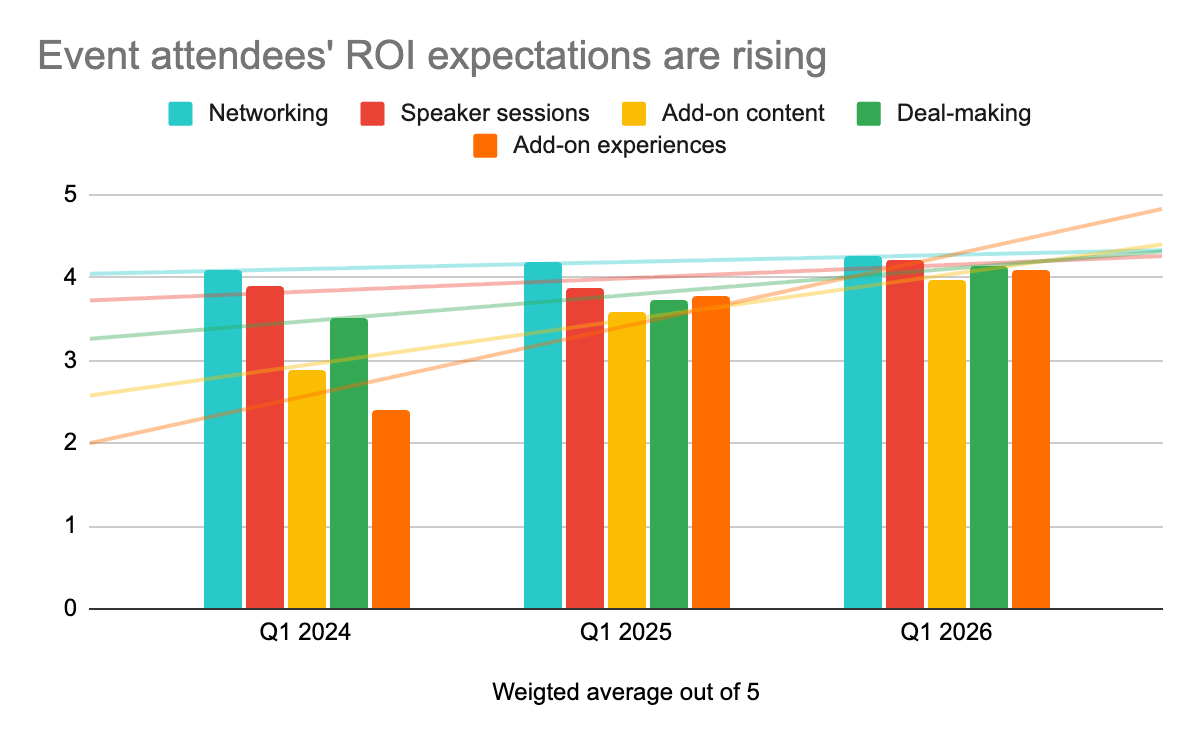
Budgets are tightening and attendees demand more from every event element. This is best illustrated with the following (weighted averages out of five).
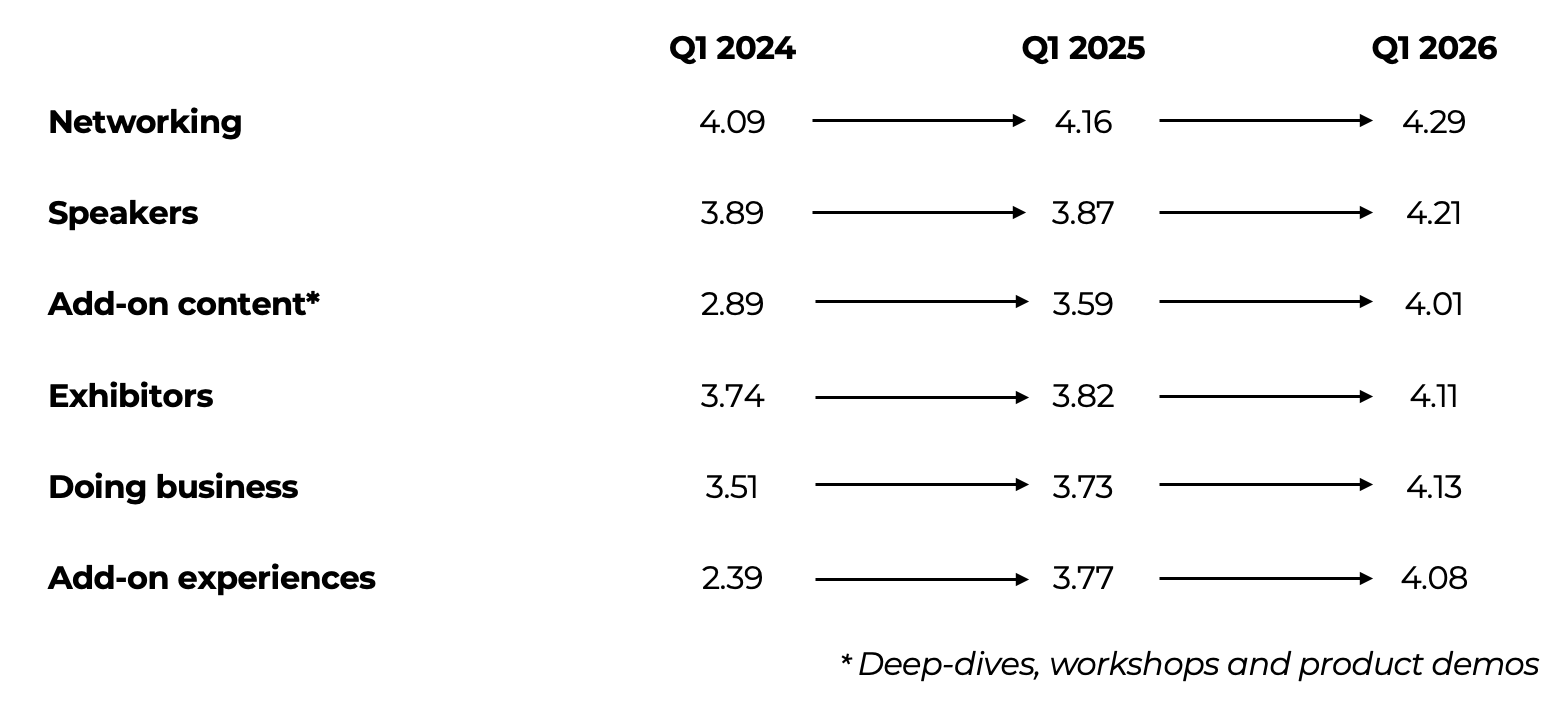
Nothing escaped this recalibration. Attendees are raising expectations across the board. Networking, speakers, exhibitors and doing business, deep-dives, and experiences, every element now sits above 4.0 out of 5. That’s the new baseline.
Why? Because when you’re justifying event spend to finance, every component of the event must deliver value. Mediocre speakers won’t cut it. Pointless workshops won’t cut it. Awkward networking is out.
The entire event – from content to connections to what happens outside the conference room with exhibitors and added experiences – must justify the cost of showing up.
Networking and Meetings
When asked to rate the importance of different event elements, as in previous years attendees gave networking the highest score: 4.29 out of 5. It’s also the second biggest reason people attend (31%), after learning (38%).
The networking dimension
What makes up networking? There’s peer-to-peer learning. Sparking ideas. Finding collaborators and partners. Doing business. But also getting to know colleagues as humans, not job titles. Building professional communities. Socialising.
The commercial dimension
Networking and business development go hand-in-hand. But here we saw a shift in the value people attach to them as a reason to attend. Three years ago they were equal, now there is a 10-point gap.
Networking as motivation: 25% (2024) → 27% (2025) → 31% (2026).
Business development: 25% (2024) → 23% (2025) → 21% (2026).
However, that can be misleading. While fewer people cite business development as their primary reason to attend, the importance of doing deals at events climbed sharply from 3.51 (2024) to 3.73 (2025) and 4.13 (2026).
This tells me attendees aren’t going to collect business cards. They’re going to build actual relationships that yield commercial opportunities.
The organiser challenge
Bizzabo’s 2026 research shows 60% of organisers rate their networking “somewhat effective,” while only 15% rate it as “very effective.” That’s out of sync with the importance attendees attach to networking.
Organisers must not leave networking to chance.
Attendees rate networking at 4.29 out of 5. That’s a gap.
Content and Learning
Learning is the top motivation for attending events at 38%, holding steady across all three years.
We can break that into structured learning (speaker sessions, masterclasses, etc), the content organisers design to deliver, and unstructured learning (through networking etc).
When we look at the structured learning component, we see a change in what constitutes value.Not only has the value attendees attach to keynote sessions increased, but there’s been a significant jump in how they value add-on content like workshops and masterclasses.
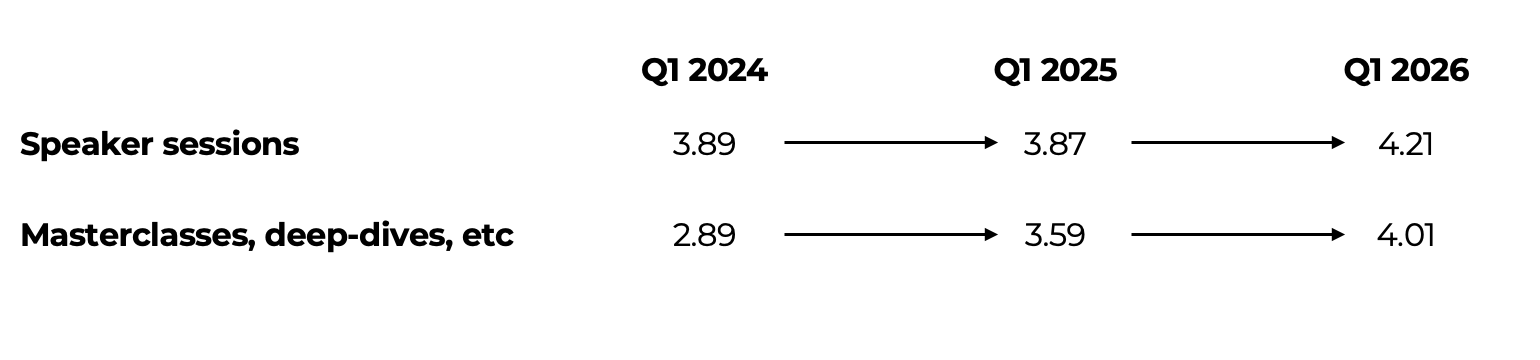
Deep-dives started from a low base (2.89), but the 39% climb shows attendees now value hands-on sessions and workshops nearly as much as the speakers on stage.
To be clear, they’re not choosing between formats. They’re placing higher value on everything. Every session - whether a 25-minute keynote or hour-long masterclass or workshop - must deliver substance they can apply.
For senior leaders, that might mean frameworks, strategic insights, and peer perspectives they can use. For middle management, that might mean hands-on approaches to problems they’re facing day-to-day.
For me, it’s also about the rhythm of an event. Giving attendees the opportunity to move between shorter speaker sessions and longer masterclasses, interspersed with networking and meetings, keeps energy flowing throughout the day. Variety in formats prevents the fatigue that comes from sitting through panel upon panel throughout the day.
Exhibitors That Matter
I, increasingly, tend to think of Exhibitions as part of the event’s content experience. The more relevant and valuable to exhibitors to the audience, the better all around.
The value attendees place on exhibitors jumped from 3.74 (2024) to 3.82 (2025) to 4.11 (2026). That’s nearly a 10% increase in three years, not far off the value they extend to speakers.

This also connects directly to what attendees want from the exhibitor floor, with more wanting hands-on experiences at events rather than purely conversations.

Attendees see exhibitors as direct access to solutions, products, and potential commercial partnerships. They want to meet vendors who can solve actual problems they’re facing, even more so when budgets are tight. They want to “experience” their solutions on offer.
The exhibitor floor is essential business infrastructure. Organisers should push beyond static displays to interactive demos, live problem-solving, and direct conversations with decision-makers, not booth staff reading from scripts.
This is experential content.
Events as Ongoing Relationships
Pre-event
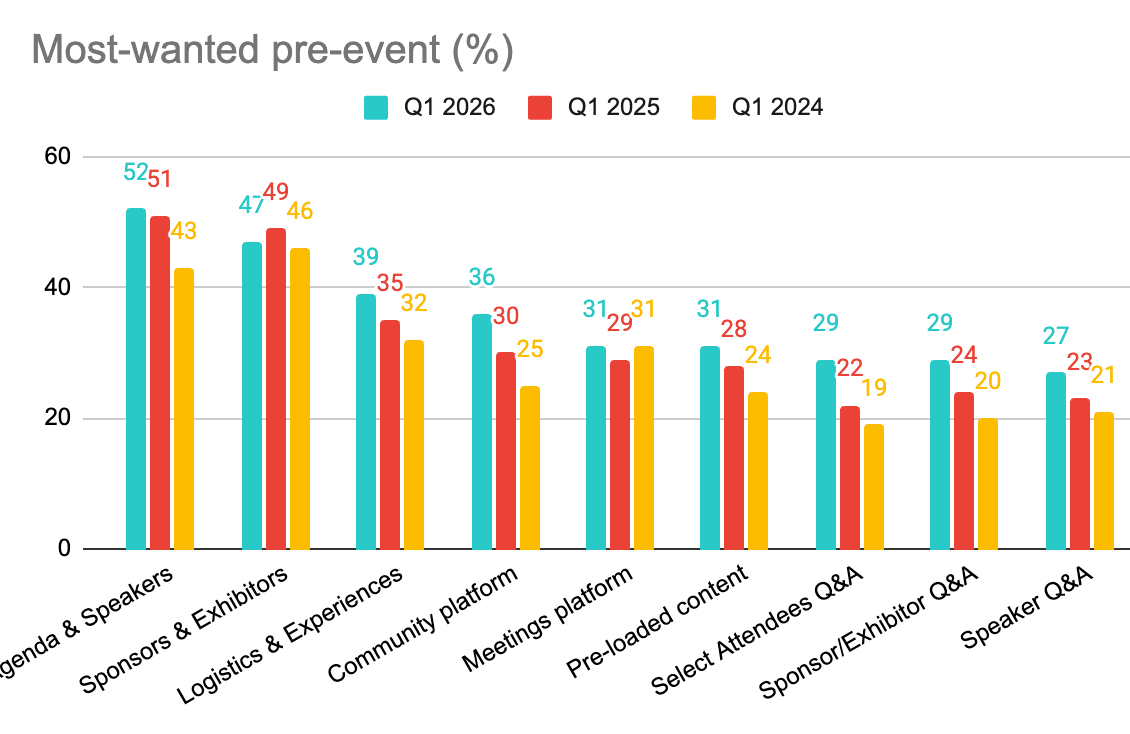
It’s about decision-making and early peer-to-peer connection.
Information: Information that aids decision-making – the agenda and speakers, sponsors and exhibitors, and logistics.
People: It’s about people. Who will we meet, how can we meet/engage (even before the event starts)?
Both have grown. Agenda and speaker information rose from 43% to 52%. Community platform interest climbed from 25% to 36%. The first helps attendees decide whether to attend. The second helps them extract value before they arrive.
The fact that both increased year-over-year shows attendees vetting harder and demanding earlier engagement. They’re building ROI cases before committing and identifying targets before stepping through the door.
Post event
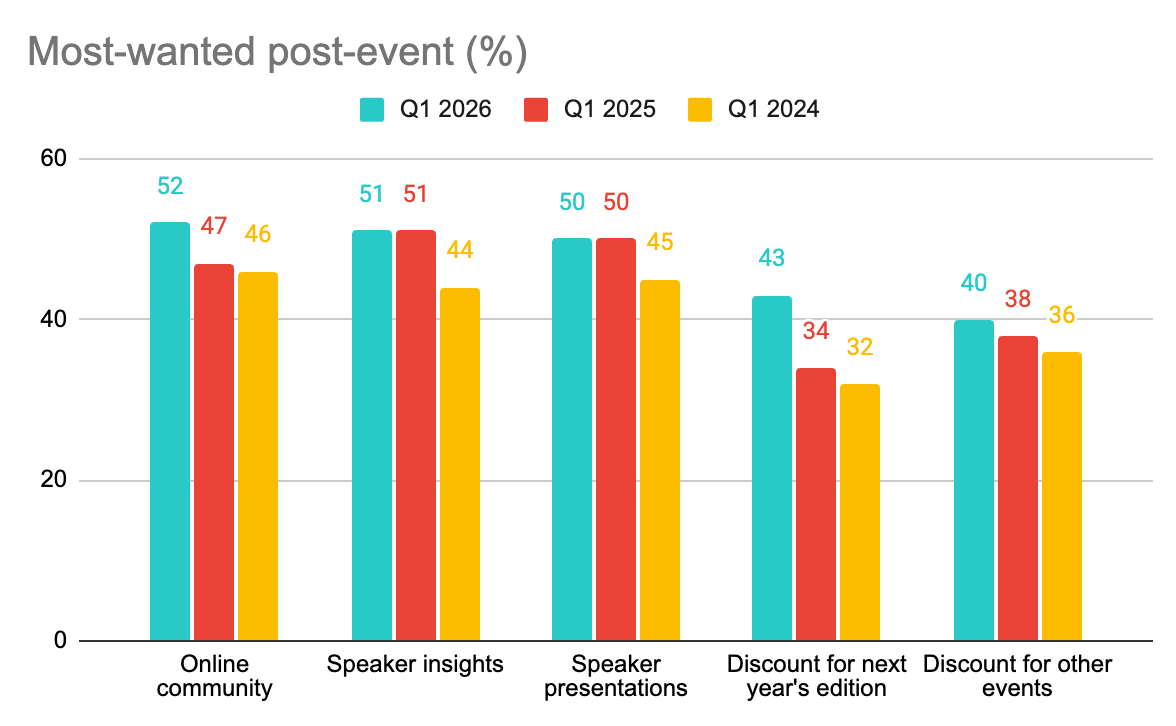
Extending event communities is the aspiration of many event organisers. The results above seem to support the idea. However, there isn’t widespread evidence of successful post-event community implementation.
It’s not good enough to rely on some community platform that either adds more noise to people’s day with superficial conversations, or is a ghost town soon forgotten. The following is by no means a new idea, but it’s worth mentioning again.
Event organisers can think of events like media brands or membership organisations. Successful communities share specific characteristics:
Ongoing value delivery. Communities that work provide continuous content – member spotlights, exclusive insights, industry analysis, practical tools. Not event recaps. Not “remember when” posts. Fresh value.
Peer-to-peer connection. Structured opportunities for members to help each other, share knowledge, solve actual problems together. The organiser facilitates, but members drive conversations.
Membership benefits. Early access to speaker content, discounts on future events, exclusive networking opportunities. Research suggests people value what they pay for – free communities often become ghost towns.
Regular touchpoints. Rhythm matters. Think, for example, weekly newsletter, monthly webinar, quarterly get-togethers.
Achieve this, and the event becomes the anchor moment in an ongoing relationship, not a one-off transaction.
This can fundamentally change the business model for event organisers, opening a path beyond one-off ticket sales toward building customer lifetime value with those who engage beyond the event.
But it’s hard to get right.
Experiences Become Non-Negotiable
The importance of add-on experiences to attendees surged from 2.39 (2024) to 3.77 (2025) to 4.08 (2026), the biggest value jump of any metric.
This seems particularly true for longer, regional and international events. “Location” experiences around the event (which also includes networking opportunities), climbed across the board from 2024 to 2026
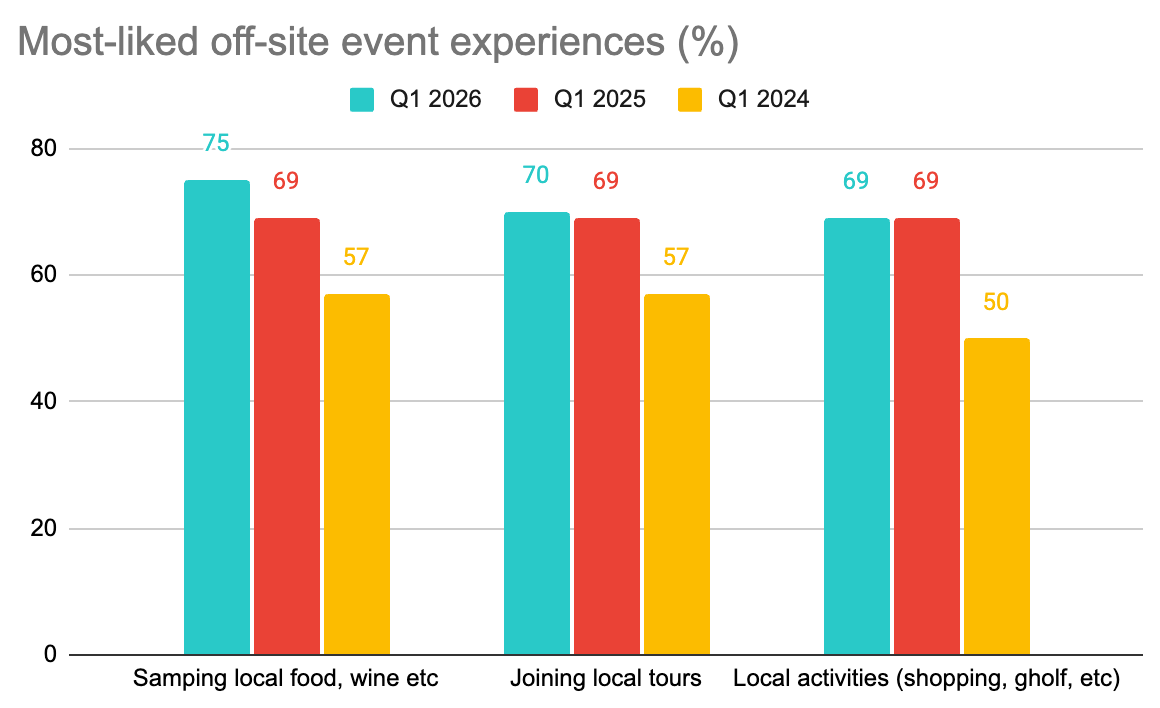
It feels logical. If attendees invest time and spend money on event tickets and regional or international travel, they want memorable experiences – in and beyond the conference rooms. Experiences create stories. Stories help justify going.
Experiences also include on site dimensions:
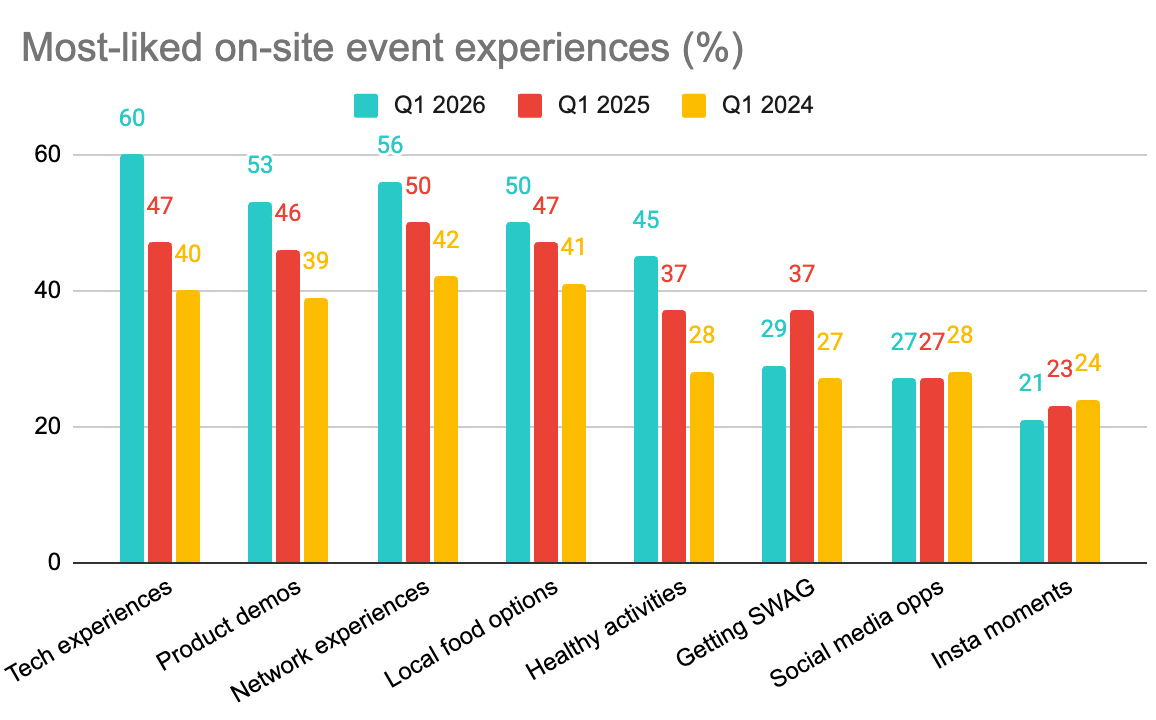
We’ve discussed tech and product experiences, and the need for structured networking opportunities. Also worth noting is that “local” food options and healthy activities continued to increase in “likeability” over the last three years.
Cost and Convenience Wins
Sustainability as a barrier to event attendance climbed from 28% (2024) to 33% (2025) to 36% (2026). However, one of the clearest shifts in the data is how attendees now prioritise accessibility over other sustainability considerations.
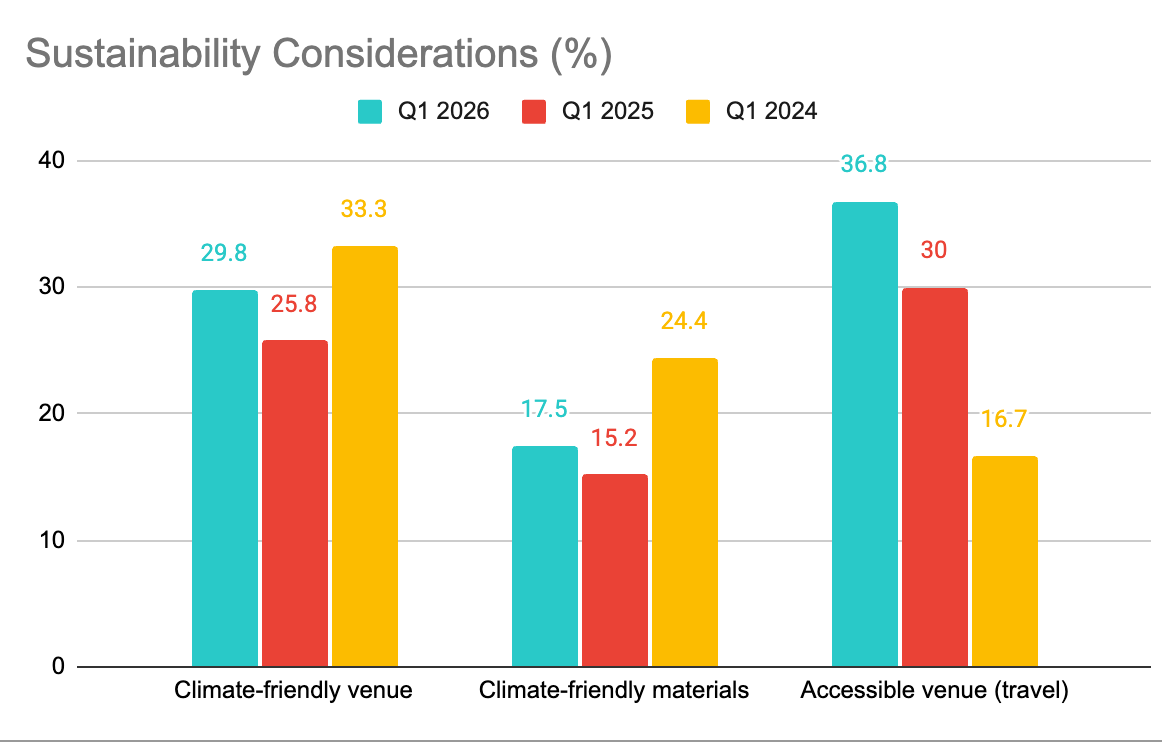
The importance of an accessible venue – cost, ease of travel, and time – has more than doubled in three years, rising from 16.7% in 2024 to 36.8% in 2026.
This reflects wider travel-budget pressure, and the importance of time and convenience. Accessible venues matter.
Smaller is Better?
For this particular demographic, smaller, more intimate events are better.
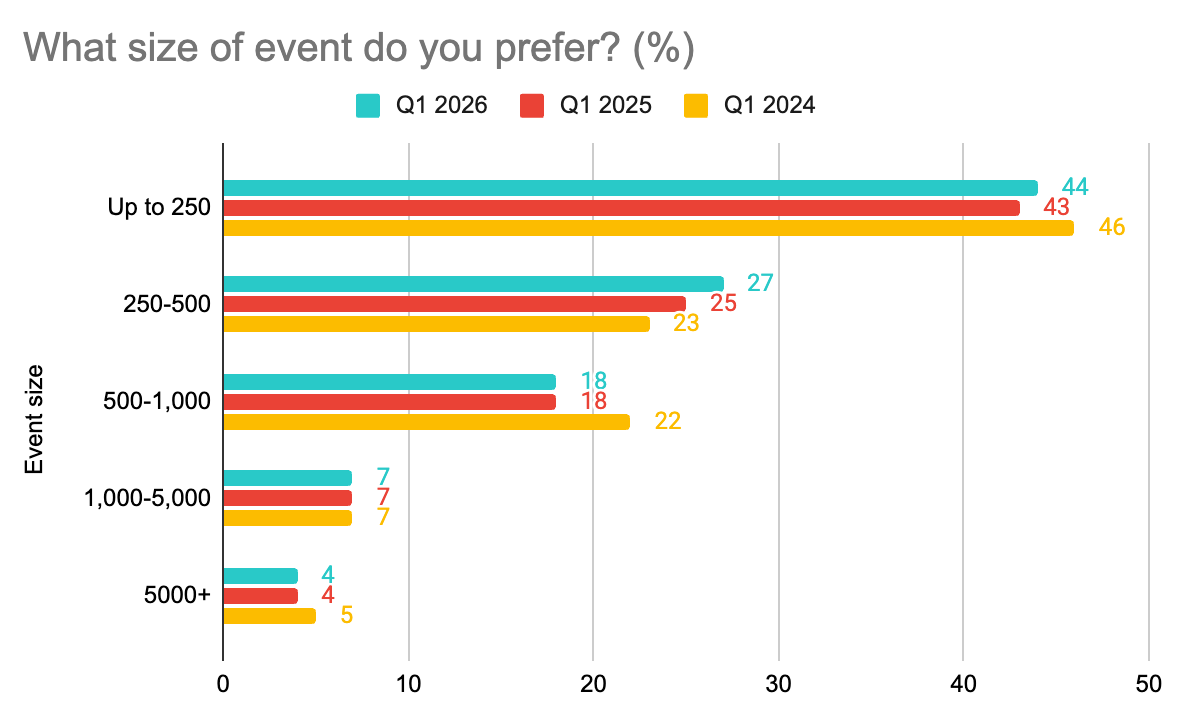
The 71% preference for sub-500 events isn’t arbitrary. It reflects what this demographic values – conferences that enable genuine networking and peer learning, not massive trade shows which are more transactional than relational.
Format Flexibility Rises
Finally, and perhaps surprisingly, in-person preference fell from 64% (2024) to 59% (2024) to 53% (2026). Virtual stayed flat around 25-30% over the three years, while “No preference” rose to 17% (2026) from 11% (2024).
I do not interpret this as in-person losing. It isn’t. But attendees are getting more selective. Some events justify travel. Some don’t. Cost, convenience and supply (sheer number of events to attend) are important ROI calculations.
Attendees have learnt to be choosy.
What This Means for Conference Organisers
If you’re running sub-1,000 person conferences, here’s my top take-outs for what matters:
1. Every element must justify itself
Forced panels, pointless workshops, awkward networking—attendees won’t tolerate any of it when fighting finance departments for approval.
2. Design networking, don’t hope for it
Attendees rate the importance of networking at 4.29 out of 5 but only 15% of organisers say they deliver networking well. There is a place for socialising, but structured facilitation beats wine, canapes and hoping.
3. Format variety sustains attention
Rhythm energises. Mixing short talks, deep-dives, meetings, and experiences keeps energy high and fatigue low. Rigid programme structure and panel upon panel session don’t satisfy attendees anymore.
4. Pre and post-event engagement isn’t optional
Attendees want to vet before committing and extract value after leaving. Events aren’t just three days. They’re months-long if not 365.
5. Location matters
Choose venues with easy airport access, simple logistics, central locations. Attendees pick convenience and cost- and time-savings.
6. Experiences create stories
Local food, tours, activities, healthy options aren’t nice-to-haves. They add value, offer networking and help attendees create stories.
7. Show, don’t tell
Tech experiences and product demos both jumped to 60% and 53% respectively. Stop accepting “I’ll talk about our product” sessions. Demand interactive demos where attendees can touch, try, and test.
8. Selectivity is the new normal
In-person events haven’t and will not lose value, but it has lost its automatic status. It’s competitive, and attendees are under pressure. They’re choosing fewer events, more deliberately. The “same old” doesn’t crack it anymore.
9. Scale ≠ FOMO per se
For years, event marketing leaned on scale. Biggest audience, longest speaker list, most sponsors. That kind of FOMO marketing is losing its edge.
Attendees now want to be part of something valuable. Who will I meet? What will I learn? What will I experience? What will I leave with? How will it help in the longer run?
Scarcity, relevance, and quality will outperform volume in driving attendance.
The Bottom Line
We see attendees under pressure. Travel budgets climbed from 52% (2024) to 55% (2025) to 60% (2026) as a barrier.
In the meantime, events have exploded post-pandemic, with supply never as high as it is now.
Every event must work harder to justify itself, with relentless focus on value. Attendees now consider everything more critically because they can’t afford events that waste time or money.
The winners are organisers who recognise events aren’t about filling rooms anymore. They’re about delivering measurable value across every touchpoint, from pre-event vetting to the event itself and post-event engagement.
Attendees continue calibrating their expectations.
Are you?
Connect with me at That Coalition
That Coalition provides fractional event services to businesses that need expert conference programming and execution without the overhead of full-time staff.
We handle speaker curation, programme production, event design and operations, and more through a network of trusted partners, with urgency, efficiency, and a relentless focus on attendee value.
No one-size-fits-all pricing. You only source in what and who you need when you need it in your event’s lifecycle. Get in touch with me at cobus@thatcoalition.com or on LinkedIn at https://www.linkedin.com/in/cobusheyl/.