

A hypothesis: Faced with overwhelming complexity, we are increasingly outsourcing our critical thinking to LLMs. It’s faster, easier, and less uncomfortable than using all our grey matter working through uncertainty.
And as the default response to complexity becomes “ask AI,” our underlying cognitive muscles—the ability to question assumptions, tolerate friction, and form independent judgment—are beginning to atrophy.
That made me wonder how such a change might impact events. Whether it’s an existential threat, a major opportunity, or a bit of both.
Of course, events’ greatest asset remains what AI cannot replicate: bringing people together for peer-to-peer conversation.
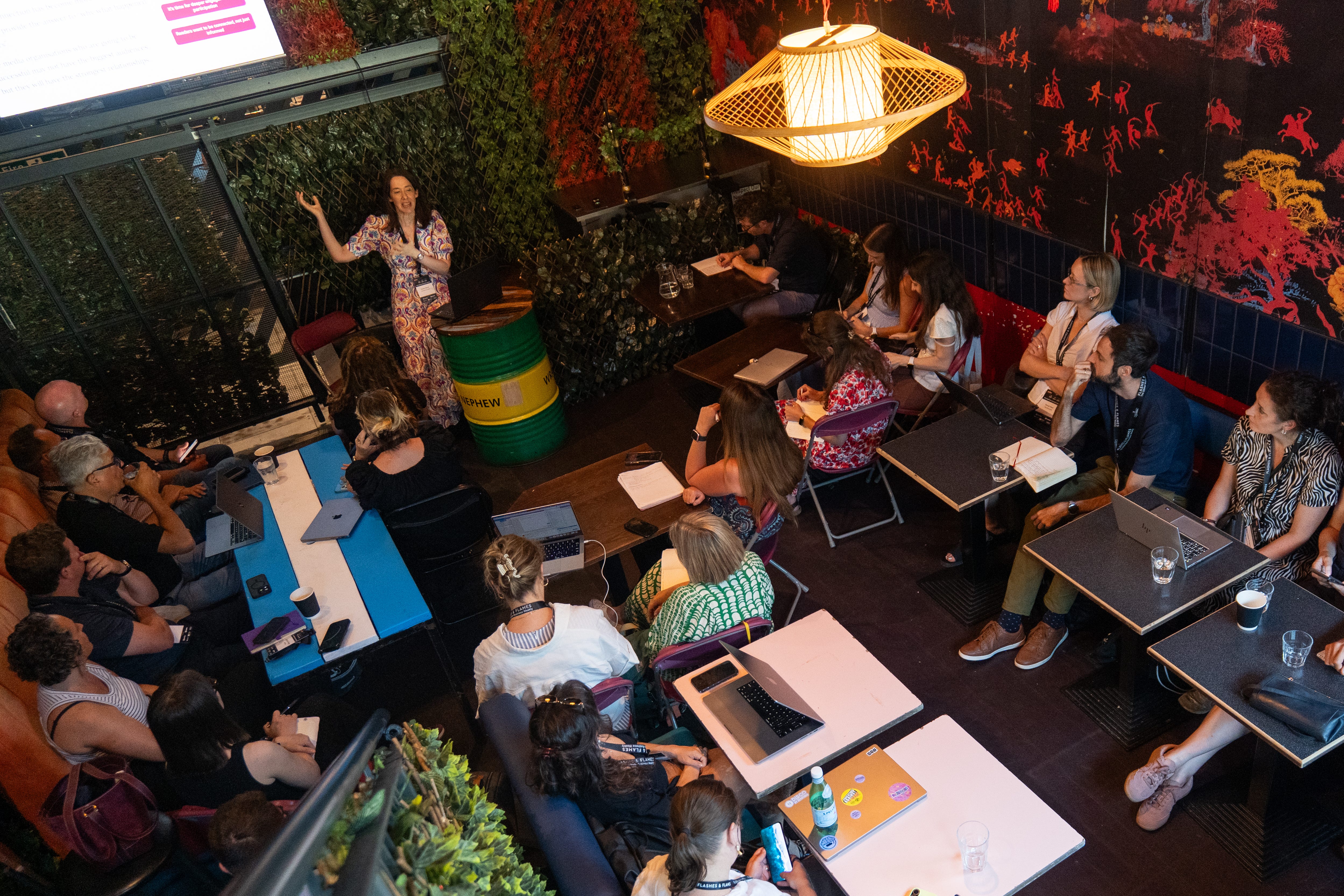
But what about the content side of events? How must that evolve?
When people can get quick answers from a prompt, passive “bullet-point” keynotes are dead. If event planners keep serving up easily automated content, they become accomplices in this cognitive decline. An event’s job is to stimulate thought, not lull the brain to sleep. If an LLM can summarize your speaker’s entire presentation in six seconds, you have to ask yourself: why did you book them in the first place?
But if event programmers adapt to changing habits around our use of LLMs, they can win on two fronts:
Creating live environments where human thinking is stimulated and unavoidable.
Deploying AI behind the scenes to translate that live energy into hyper-relevant content long after the curtains close.
Here’s my thesis:
“As critical thinking and judgement become easier to outsource to LLMs, the events that matter won’t be the ones that dump information. They’ll be the ones that make deep thinking irresistible in person … and seamless to act on afterward.”
Here are some thoughts on how event content design might have to evolve to match the way our brains are being rewired.
Part 1: Rethinking Session Content
We’ve adapted to cognitive shifts before. As attention spans shortened, we cut session lengths. As passive listening decayed, we added live polling and Q&A apps. Now, we need to adapt to the developing age of outsourced judgment.
AI excels at codified information. It fails at tacit knowledge—the political nuance, emotional stakes, the untold learnings from spectacular failures, and the lessons that only come from lived experience.
Event content should not compete with AI on information delivery. It should compete on the thinking AI cannot do. To achieve this, our live sessions must change:
Flip the classroom: Send short, focused briefing materials before the event. Use stage time strictly for active interrogation: live Q&A, polling, and small-group debate. The reading happens beforehand; the thinking happens in the room.
Curate for tacit knowledge: Choose speakers for their raw instinct, not polished frameworks. Look for people who can share messy failures and ungooglable nuance that cannot be reduced to AI bullet points.
Stage radical disagreement: Bring speakers with genuinely opposing views on stage together. Not debate theatre, but actual disagreement. Encourage the room to work through competing logic rather than receive a neat consensus.
Introduce “Human vs. Machine” moments: Have a speaker live-critique what an LLM says about their problem. Show exactly where AI reduces complexity to generic frameworks and where human judgment must step in.
Organise structured peer-vetting circles: Focus the room on challenging each other’s execution strategies. Not generic networking, but strict strategic vetting.
Run analog stress-tests: Host no-phone roundtables with real scenarios—a budget crisis or a product pivot. Attendees cannot outsource the answer; they must commit to a decision and defend it live.
Part 2: Rethinking Post-Event Content (AI as the Infrastructure)
Creating these high-friction, deeply interactive live sessions does something else remarkably powerful: it generates an incredibly rich, completely unique stream of human data.
Think about a traditional event: when an audience sits silently watching a slide deck, they generate zero data. But when you force people to actively debate, vote, and problem-solve, the room suddenly becomes a hive of proprietary insights. Every microphone comment, live poll response, and workshop transcript becomes raw, valuable content that doesn’t exist anywhere else on the internet.
Historically, event organisers squandered this. They treated events as one-time content dumps, posting a generic “Top 10 Lessons” blog post and sending the exact same newsletter to everyone.
They don’t have to, and this is precisely where AI steps up. We shouldn’t use AI to replace human thinking during the event, but we should use it as an intelligence layer after the event to process the messy, valuable human engagement that just occurred.
Because modern AI tools can process vast amounts of unstructured data—like live session transcripts, workshop notes, and audience Q&A logs—that high-friction room becomes a unique content engine:
Capture the Nuance: Use AI to run sentiment analysis, topic heat maps, and pull genuine audience pain points from the live verbal discussions.
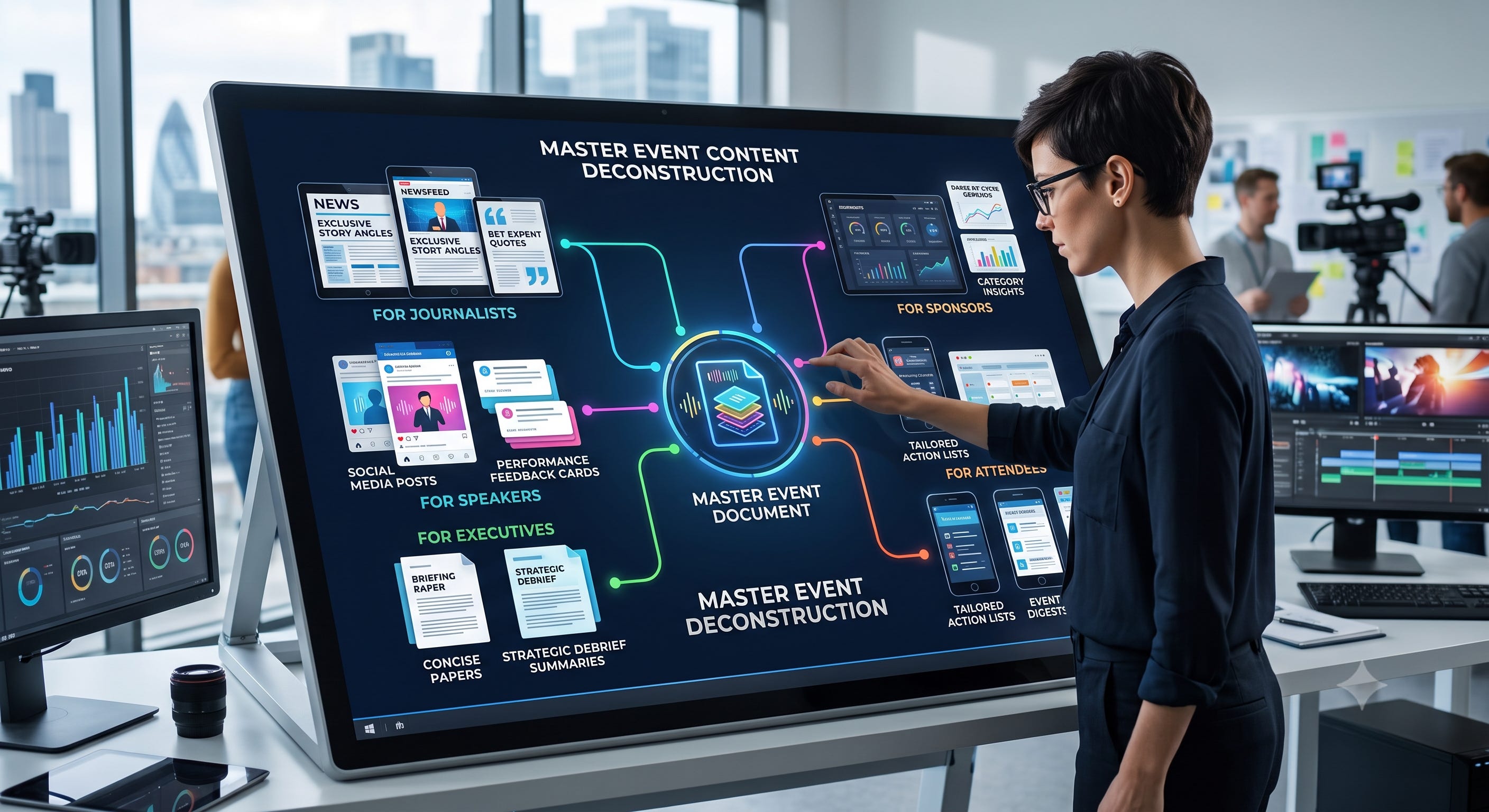
Segment for Relevance: Instead of a generic post-event email summary, use AI to instantly shape tailored outputs from that raw session data based on who is reading it:
Sponsors get category strength and market share-of-voice reports.
Journalists get strategic story angles and expert source briefs.
Attendees get personalized action lists based on the specific debates they joined.
Executives get high-level strategic debriefs.
This hyper-personalisation used to require massive editorial teams. AI infrastructure makes it possible to generate these persona-specific assets instantly from a single afternoon of intense human debate.
The Full Circle: Meeting Brains Where They Are
These two strategies feed each other in a continuous loop:
In the room, you create friction-heavy experiences that force people to turn their brains back on.
After the event, you use AI to remove friction, delivering hyper-personalized insights straight to defined personas so they can digest it effortlessly.
As judgment becomes easier to outsource, the events that work won’t be the ones that dump the most information.
They will be the ones that compel people to think deeply in person, and use smart infrastructure to keep that thinking useful long after everyone has gone home.
About That Coalition
The event sector is thriving, with a growing demand for meaningful connections and insights at meetups and targeted industry events. That Coalition’s "Events-as-a-Service" approach offers clients a dynamic, cost-effective way to design and deliver impactful gatherings.
Recent clients include Flashes & Flames (Monetising B2B for Information and Events Businesses, and The Definitive AI Forum for Media and Events), Media Voices (Publisher Summit and Awards), WAN-Ifra/FIPP (FIPP World Media Congress), RetailX (SubscriptionX), The Times & Sunday Times (Future of Digital Tech) and Crain Communications (Event Analysis).